English Language Training
English language training is vital in facilitating the successful integration of professional immigrants into the Canadian workforce, promoting career opportunities, and fostering a sense of belonging within the broader Canadian society. This page will provide information on English language training and how to access services and resources to enhance your English language proficiency.
English Language Proficiency
English language proficiency will support:
Workplace Communication: English is Canada's primary business and communication language. Whether interacting with colleagues, clients, or customers, clear communication is critical for building relationships, understanding instructions, and conveying ideas effectively.
Job Opportunities: Many professional jobs in Canada require strong English language skills. Fluency in English can open doors to a wider range of employment opportunities.
Career Advancement: English language proficiency allows you to navigate the job market effectively, participate in networking events, and compete for promotions, as well as enhance professional credibility and increase chances of upward mobility.
Integration into Canadian Society: Speaking English enables you to engage in social interactions, access services, and participate in community activities. It also enhances the overall quality of life and facilitates the development of a sense of belonging and connection with the local community.
Professional Accreditation: Many regulated professions in Canada require applicants to demonstrate proficiency in English as part of the accreditation process.
Cultural Understanding: English language training gives you a deeper understanding of Canadian culture, norms, and values. Language and culture are intertwined, and learning English can help newcomers navigate cultural nuances, adapt to the Canadian work environment, and build effective relationships with colleagues and other professional groups.
Canadian Language Benchmarks (CLB)
The Canadian Language Benchmarks (CLB) is the system used to assess and describe the English language proficiency of adult immigrants in Canada. The CLB consists of 12 levels, ranging from CLB 1 (basic) to CLB 12 (advanced).
The required CLB benchmark will vary depending on the context and specific requirements of different professions and programs. However, a CLB level of 7 or higher is generally considered adequate for most professional occupations and to fully participate in Canadian society. At CLB 7, individuals can effectively communicate and understand complex ideas, engage in discussions, and perform work-related tasks relatively easily. The required CLB level may vary depending on the occupation, industry, or program. Some professions or regulatory bodies may have higher language proficiency requirements, especially in fields such as healthcare, education, or legal professions. Therefore, professional immigrants must check the specific language requirements for their intended occupation or program.
Determining Your CLB Level
To measure your Canadian Language Benchmark (CLB) level, you can follow these steps:
Self-Assessment
Start by self-assessing your language skills based on the CLB descriptors. CLB provides detailed descriptions of language skills and tasks at each level, covering speaking, listening, reading, and writing.
You can find CLB self-assessment tools and checklists online, which can help you gauge your proficiency level, such as the CLB-OSA.
Official Language Assessment Tests
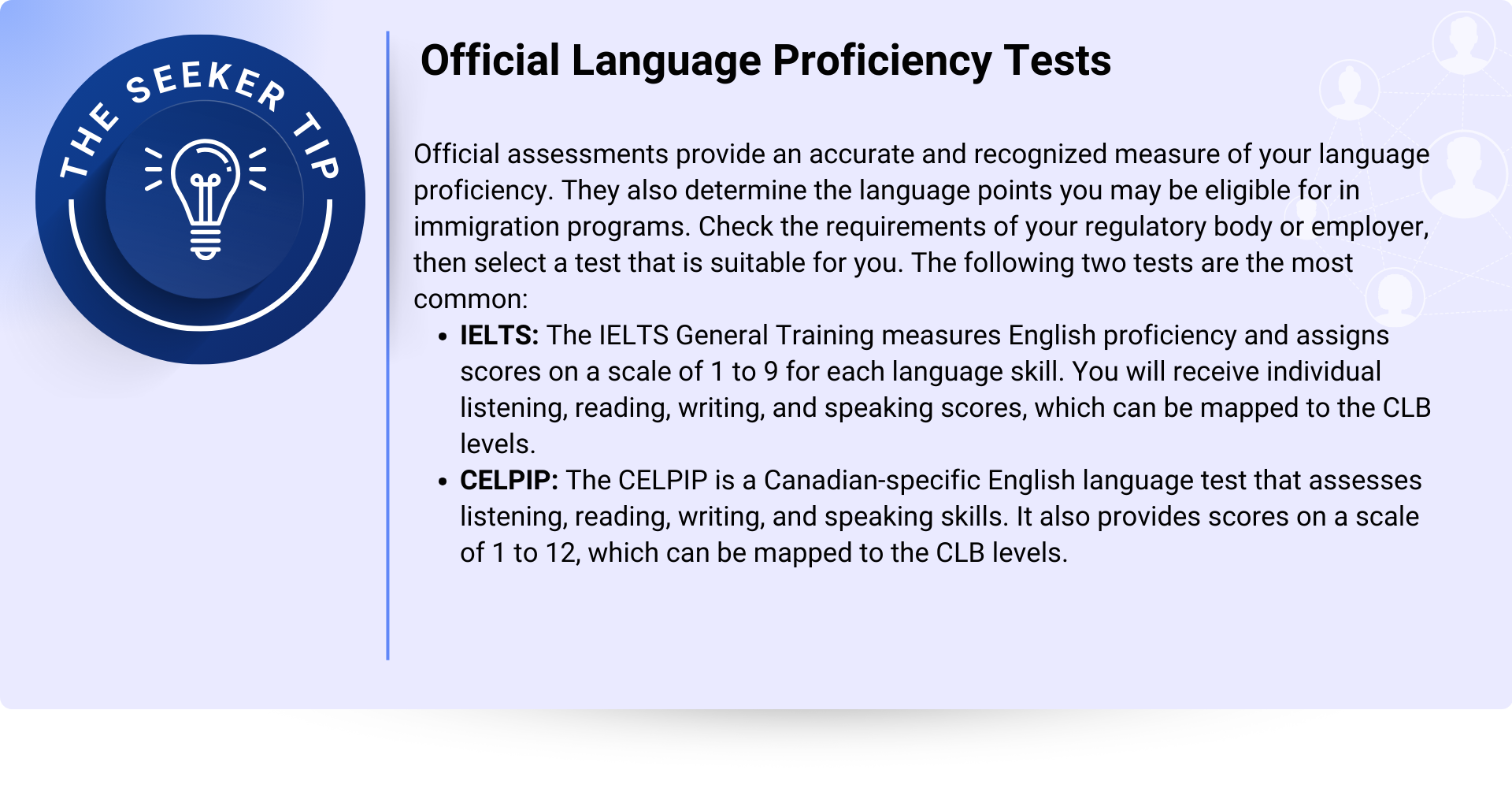
Take an official language proficiency test recognized by Immigration, Refugees and Citizenship Canada (IRCC). The most common tests accepted for immigration are the International English Language Testing System (IELTS) General Training, and the Canadian English Language Proficiency Index Program (CELPIP).
English Language Training Programs
Language Instruction for Newcomers to Canada (LINC)
LINC is a government-sponsored program to assist adult immigrants and refugees in their language-learning journey. LINC offers free English language training, helping newcomers develop the necessary skills to integrate into Canadian society. The program enhances speaking, listening, reading, and writing abilities at various proficiency levels aligned with the CLB. LINC provides flexible learning options, including in-person classes, online courses, and blended learning, to cater to participants' diverse needs and schedules.
LINC incorporates settlement support services, equipping newcomers with essential knowledge about Canadian culture, systems, and resources. Qualified instructors guide learners through the program, offering personalized guidance and progress monitoring. With its comprehensive approach, LINC is pivotal in supporting newcomers' successful settlement, employment, and social integration, empowering them to thrive in their new Canadian lives.
When you complete a CLB level, you’ll get a certificate that shows your skill at that level. If you complete a CLB level 4 or higher in speaking and listening, you can use that certificate as proof of meeting the citizenship language requirement.
Eligible newcomers include:
Permanent Residents: Individuals approved as permanent residents of Canada are typically eligible for the LINC program. This includes refugees, individuals who have immigrated through family sponsorships, skilled worker programs, and other immigration categories.
Convention Refugees and Protected Persons: Individuals who have been granted refugee status in Canada or recognized as protected persons are eligible for the LINC program.
Live-in Caregivers: Live-in caregivers approved for permanent residency in Canada are also eligible for LINC language training.
Dependants: Dependants of permanent residents or convention refugees who are in Canada and are at least 18 years old can access LINC classes. However, priority may be given to principal applicants.
Resources
If you want to improve your English proficiency generally or must increase your CLB level for licensing and credentialing, please see the following list of organizations in Alberta that offer LINC and/or other language programming. This is not an exhaustive list of Alberta organizations and their English-language training programs.
ORGANIZATION | LOCATION | PROGRAM(S) |
|---|---|---|
Calgary | LINC; LINC Home Study; The Workplace Online Retention Class (WORC); CNC; LINC Blended | |
Calgary & Southern Alberta | Online LINC; Health Care Aide for English Language Learners; English for Academic Purposes; LINC Home Study; Regional LINC | |
Calgary | ||
Edmonton | ||
Edmonton | ||
Edmonton | ||
Lethbridge | ||
Red Deer | ||
Red Deer | ||
Medicine Hat, Brooks | ||
Calgary & Online | English Conversation Group Intermediate (Virtual), English Conversation Group Intermediate (In-person), New Friends & Neighbourhood Groups for Women | |
Online | ||
Edmonton | ||
Lethbridge | ||
Online |
Studying for the Canadian Citizenship Exam
The Canadian citizenship exam is a crucial step in becoming a Canadian citizen. It is designed to assess applicants' knowledge of Canada, including its history, values, institutions, symbols, and the rights and responsibilities of Canadian citizens. The exam typically consists of multiple-choice questions and may include questions about the applicant's language proficiency in English or French. Preparing for the citizenship exam is essential to ensure a successful outcome.
In Alberta, newcomers can access various resources and tools to study for the exam. Some helpful resources include:
See the Government of Canada website for preparation for the citizenship test and interview.
The official "Discover Canada: The Rights and Responsibilities of Citizenship" study guide, available online and in print.
Settlement organizations and public libraries may provide citizenship preparation classes and resources, for example:
Online practice tests and study materials can be found on, for example:
The Immigration, Refugees, and Citizenship Canada (IRCC) website
Online Training Program - Canadian Citizenship Test | CitzenTest
Canadian Citizenship Practice Test | NorQuest College