Soft Skills
Hard and soft skills are necessary for supporting your success in the workplace. Hard skills are specific skills and knowledge acquired through education, training, experience, and practice, and they are often specialized hands-on, technical, and procedural. For example, hard skills in the nursing profession could include starting peripheral IV lines, administering injections, or dressing changes.
In Canadian workplaces, possessing a range of soft skills is equally important. Soft skills are non-technical attributes that are transferable between professions. This includes communication, problem-solving, conflict management, time management, and initiative-taking. Canadian employers pay particular attention to soft skills during recruitment and evaluation of their employees. Therefore, understanding soft skills will facilitate entering your chosen job sector.
Nick Noorani, an immigrant from India who has spent decades advocating for and supporting Canadian immigrants, discusses the importance of soft skills in this video.
In separate videos, he discusses nine soft skills that can facilitate immigrants’ integration into Canadian workplaces: communication and local language, presentation skills, small talk, leadership and initiative, conflict resolution and negotiation, handling constructive criticism, flexibility, and business etiquette.
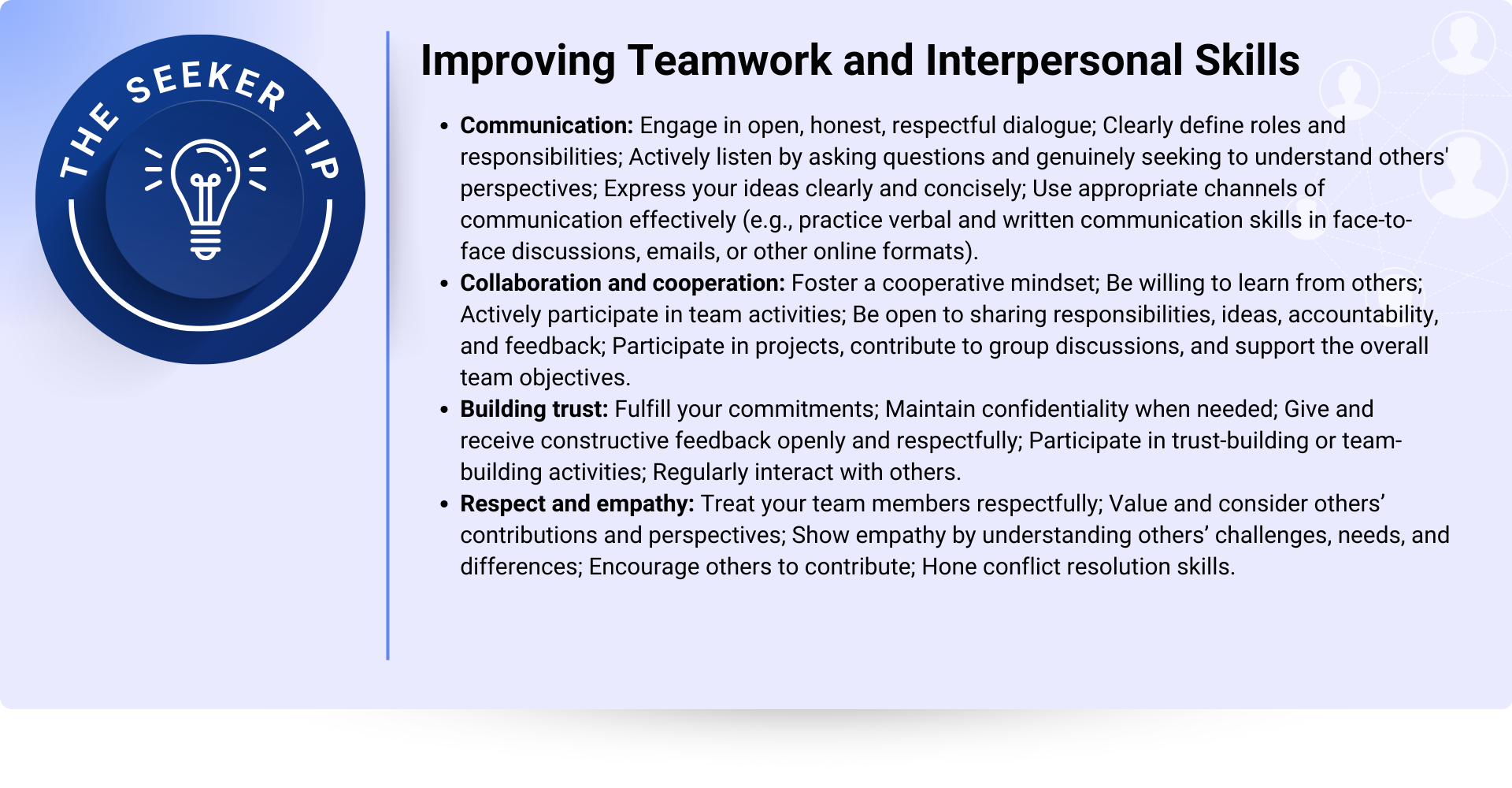
Teamwork & Interpersonal Skills
Teamwork skills play a major role in the Canadian workplace. Across sectors, employers value collaboration, inclusion, respect, adaptability, and communication. Developing teamwork and interpersonal skills will help you build positive relationships and contribute to a supportive team environment. The importance of teamwork and interpersonal skills includes:
Cultivating relationships with colleagues, employers, and clients fosters support, knowledge sharing, and career opportunities, enhancing your sense of belonging and job satisfaction.
Teams thrive on diverse perspectives and experiences, and as a skilled immigrant, your unique background contributes to innovative solutions through sharing and listening.
Teamwork enables the integration of diverse viewpoints, facilitating creative problem-solving and generating innovative ideas.
Time Management Skills
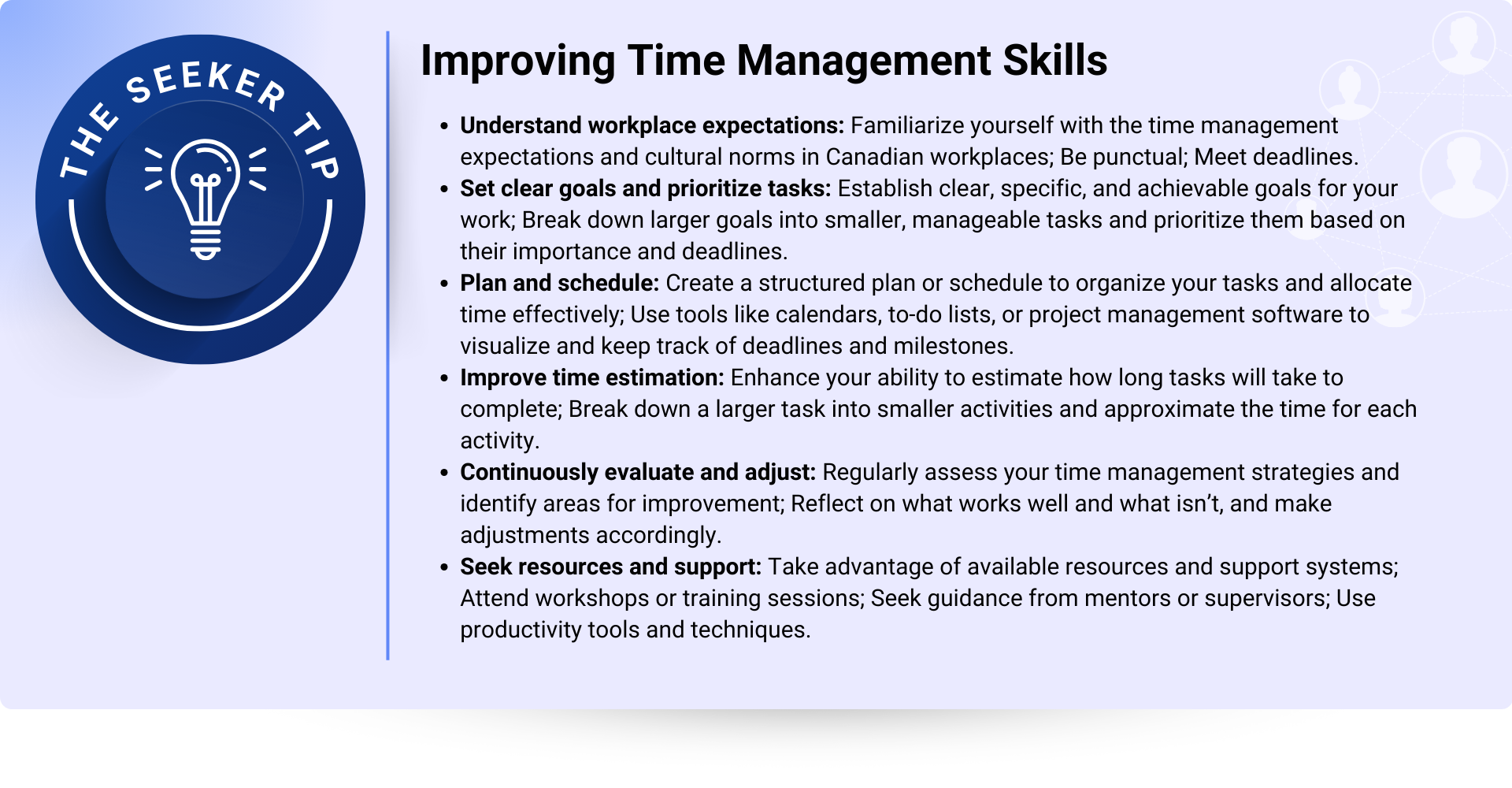
Time management skills entail effectively allocating and utilizing time to accomplish tasks, meet deadlines, and prioritize activities. It involves making the most of the available hours in a workday and adhering to schedules and timelines. This is highly valued in Canadian workplaces, where efficiency and output are crucial. Effectively managing time in the workplace contributes to:
Enhanced productivity through task prioritization, goal setting, and efficient time allocation.
Improved deadline adherence by organizing tasks, estimating time requirements, and focusing on timely completion, leading to professionalism and reduced stress.
Achieving work-life balance by allocating time to work, personal life, and leisure activities for well-being and motivation.
“In my second job experience in Canada, I was engaged in a big company with a huge workload. At first, I was feeling burnout at work as a result of tight deadlines and the unusual volume of tasks given to me. However, once I spoke with my manager and found out not all of them are emergency and by then I prioritize the tasks and distribute my time in the week so I could manage to finish them by the order of priority.”
-Pardis, MSc, Immigrant Professional
Communication Skills
Communication skills allow you to effectively convey and exchange information, ideas, thoughts, and emotions with others. It encompasses verbal and non-verbal communication, as well as listening and understanding the messages of others. Communication skills are highly valued in Canadian culture, as effective and clear communication is essential for building strong relationships and achieving common goals in the workplace. Effective communication skills looks like:
Effective collaboration: Communication fosters teamwork, idea sharing, and efficient project contribution.
Clear instructions: Vital for meeting expectations and task completion.
Client interactions: Essential for understanding needs and ensuring customer satisfaction.
Conflict resolution: Promotes positive relationships and constructive conflict handling.
Cultural adaptation: Helps navigate workplace differences and norms.
Cultural Intelligence
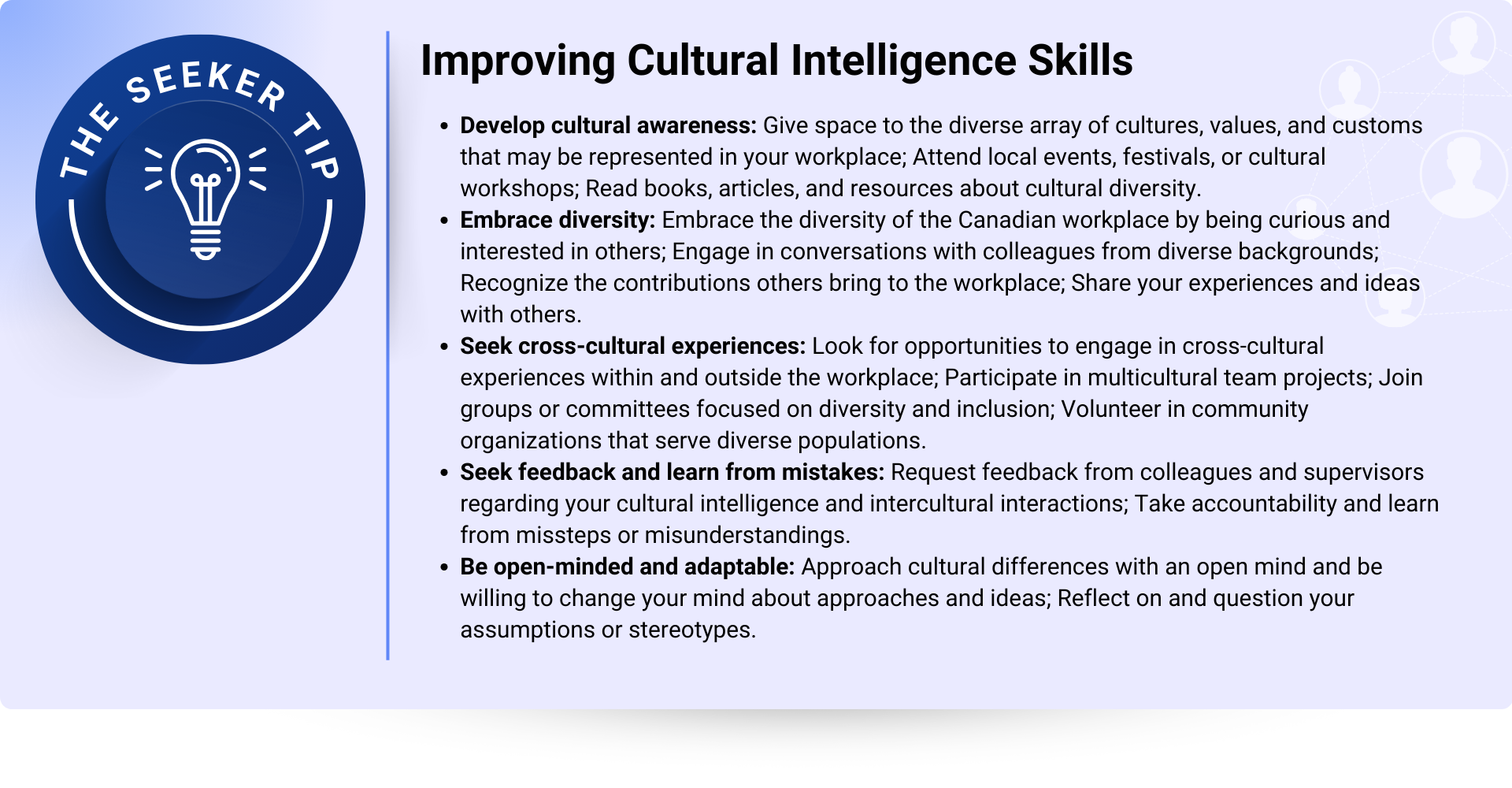
Cultural intelligence refers to understanding, appreciating, and interacting effectively with individuals from different cultural backgrounds. It involves being aware of one's cultural values and beliefs, as well as being aware and respectful of the customs, norms, and practices of others. Cultural intelligence skills in the workplace includes:
Diversity and inclusion is a core value: Many Canadians value and promote cultural diversity, and cultural intelligence contributes to an inclusive work environment where everyone feels valued and respected, regardless of their background.
Effective communication: Cultural intelligence enhances communication across cultures. Cross-cultural communication reduces misunderstandings, improves collaboration, and increases productivity.
Building relationships: Building meaningful relationships with colleagues, supervisors, and clients from different cultural backgrounds can be valuable. You can establish rapport, trust, and strong professional connections by respecting cultural differences.
Adaptation and integration: Cultural intelligence can help you adapt and integrate into the Canadian workplace. Awareness of cultural differences, unwritten rules, and diverse approaches can accelerate your integration into the workplace.
Global mindset and competitiveness: Cultural intelligence is a highly sought-after soft skill, as Canadian businesses and workplaces increasingly engage with international markets and operate in diverse cultural contexts. Your unique perspective and intercultural competence contribute to the competitiveness and success of Canadian organizations.
See The Seeker’s general guide on workplace culture for more information in Diversity and Inclusion
Conflict Management Skills
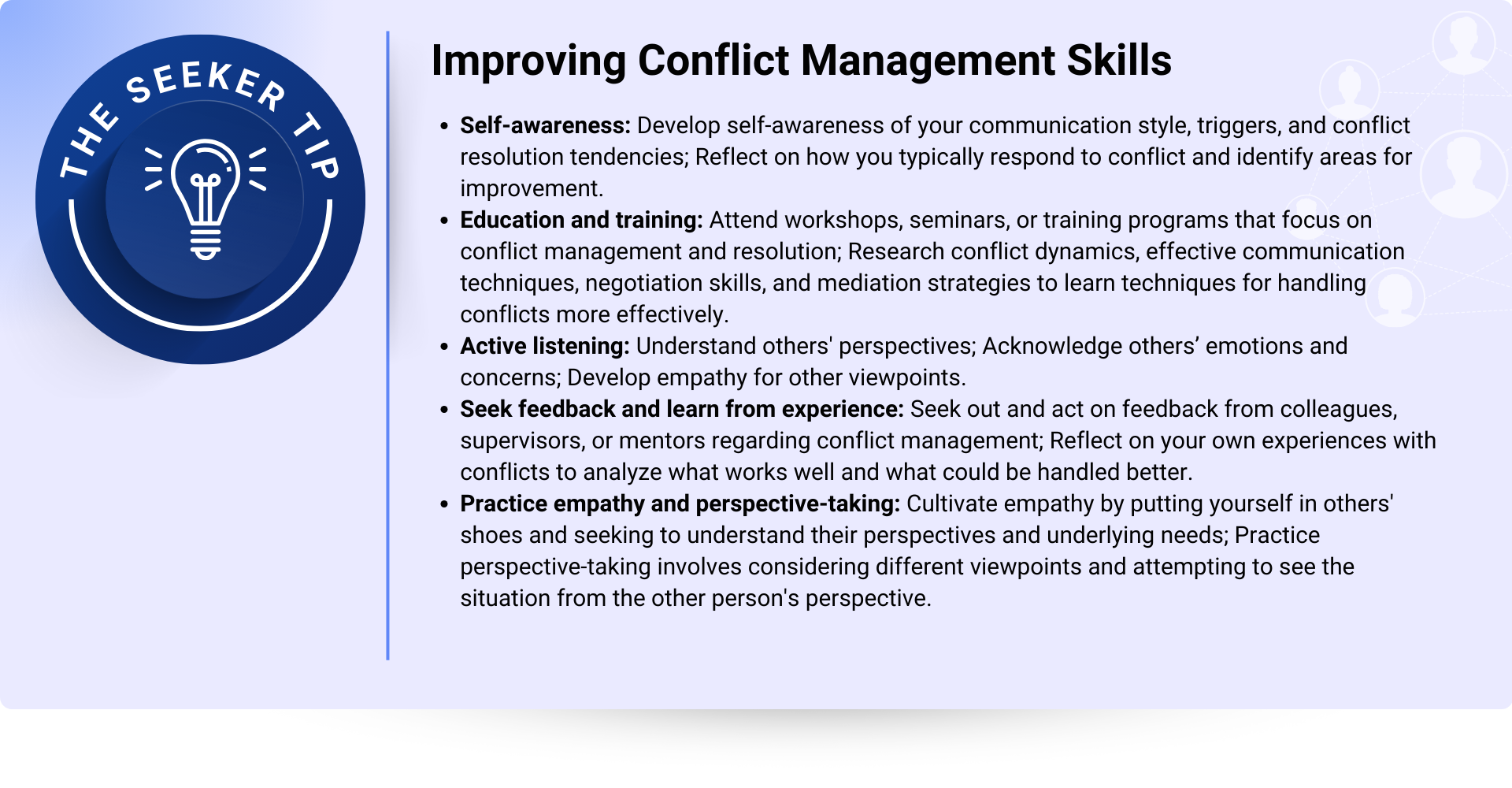
Conflict can arise in any work environment due to different perspectives, communication styles, and cultural backgrounds. Conflict resolution is a soft skill that entails effectively de-escalating and handling conflicts. Conflict resolution skills contribute to a productive and healthy work environment. Conflict management is a valuable soft skill because:
Maintaining positive relationships: Conflict management skills support positive relationships with colleagues, supervisors, and clients. Addressing conflicts constructively and respectfully can lower tensions and maintain working relationships.
Enhancing teamwork and collaboration: Navigating conflicts fosters an environment where team members feel comfortable expressing diverse opinions, engaging in healthy debates, and working together towards common goals.
Improving communication: Conflict often arises due to miscommunication or misunderstandings. Managing conflicts effectively can preempt communication challenges and prevent conflicts from arising in the first place.
Resolving issues quickly: Conflict management skills minimize negative impacts on productivity and morale, and can prevent prolonged disputes that disrupt workflow and affect team dynamics.
“In my first job experience in Canada, I had a colleague with a non collaborative attitude. He hung up the phone several times when I asked him for the follow ups on the site work. In addition, he accused me of not giving him the right directives. Instead of bringing the issue to higher places, I started to send all the guidelines and requests by email by putting my manager in CC. I started organizing meetings before the site to work with him to make sure he has all the equipment he needs. Things then settled way better gradually between us.”
-Pardis, Msc., Immigrant Professional
Adaptability Skills
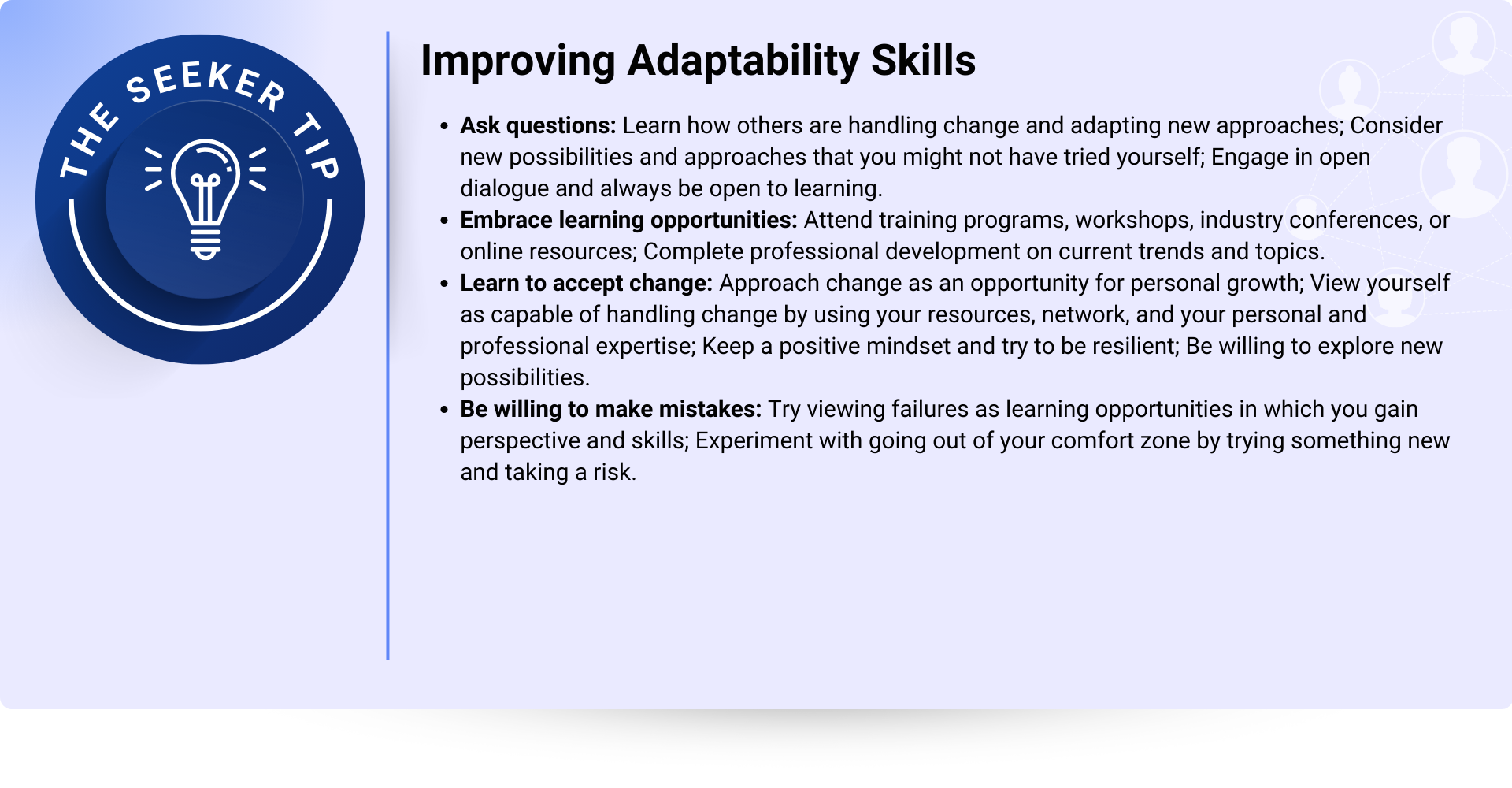
The Canadian work environment is highly dynamic, marked by continual technological advancements, market shifts, and evolving customer demands. Adaptability skills are critical. Adaptability refers to adjusting and thriving in changing environments, situations, and demands. It involves being flexible, open-minded, and responsive to new challenges, technologies, work methods, and organizational changes. Adaptability skills are important in the workplace because:
Embracing change: Continual innovations and improvements allow businesses to remain competitive and evolve according to local and global trends. Adaptability allows employees to flexibly embrace change with an open mind and adapt new ideas, technologies, and processes.
Handling diverse work environments: Given that Canada has a diverse, multicultural workforce, adaptability skills support working with others who have different backgrounds, cultures, and perspectives.
Dealing with evolving responsibilities: Employees often face new or evolving responsibilities and shifting priorities. Adaptability enables them to easily handle changing workloads and responsibilities by adjusting their focus, realigning goals, and managing their time and resources to meet new demands.
Navigating technological advancements: As technological advancements continue to shape various industries, adaptability skills are crucial for staying current with emerging technologies, tools, and platforms.
Thriving in remote and flexible work arrangements: The COVID-19 pandemic accelerated the adoption of remote and flexible work arrangements in Canada. Adaptability skills enable employees to thrive in these work environments by effectively managing their time, leveraging digital communication tools, and maintaining productivity despite the physical distance.
Demonstrating leadership qualities: Effective leaders are highly adaptable. They navigate uncertainty, make informed decisions, and inspire teams during times of change to drive positive change within the organization.
Resources
The Workplace Online Retention Class (WORC) | The Immigrant Education Society
A free online course providing language instruction and soft skills training to help you succeed in the Canadian workplace.
Skills for Success | Government of Canada
This provides Canadians with everyday skills needed for work, learning and life. Improving them will help you succeed in today’s and tomorrow’s workplace.
The Skills for Success Model | Government of Alberta